From Perplexity 11/7/2026.
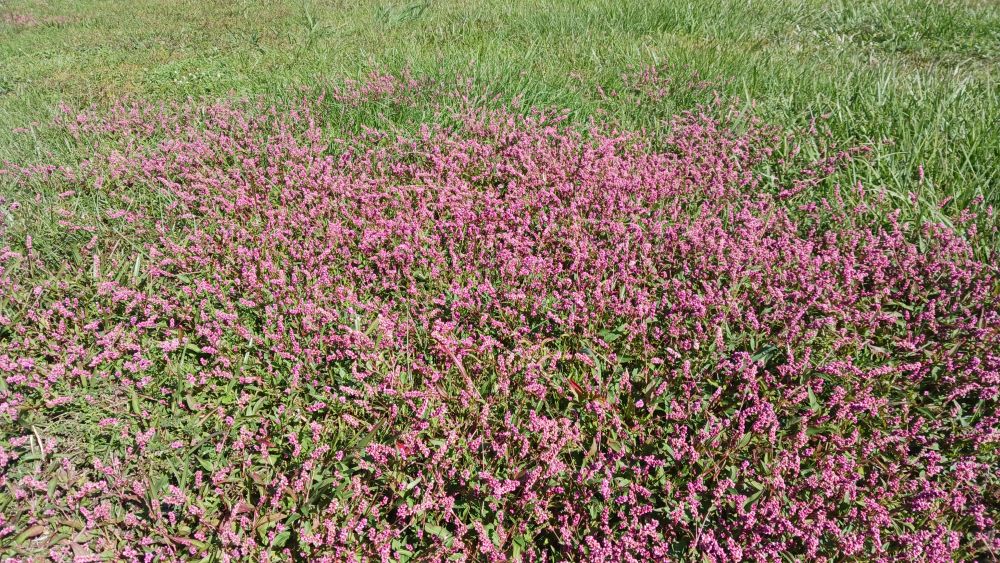
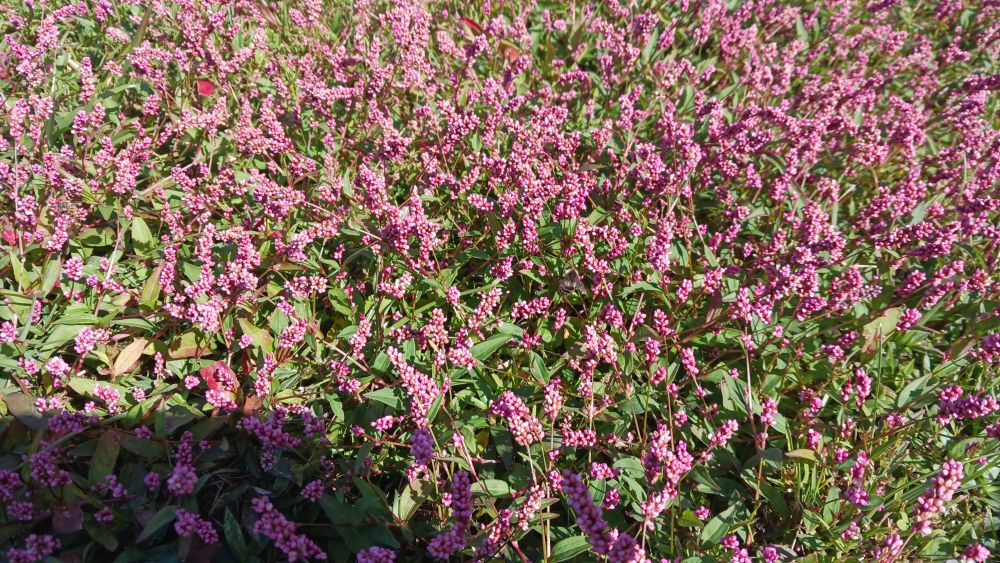
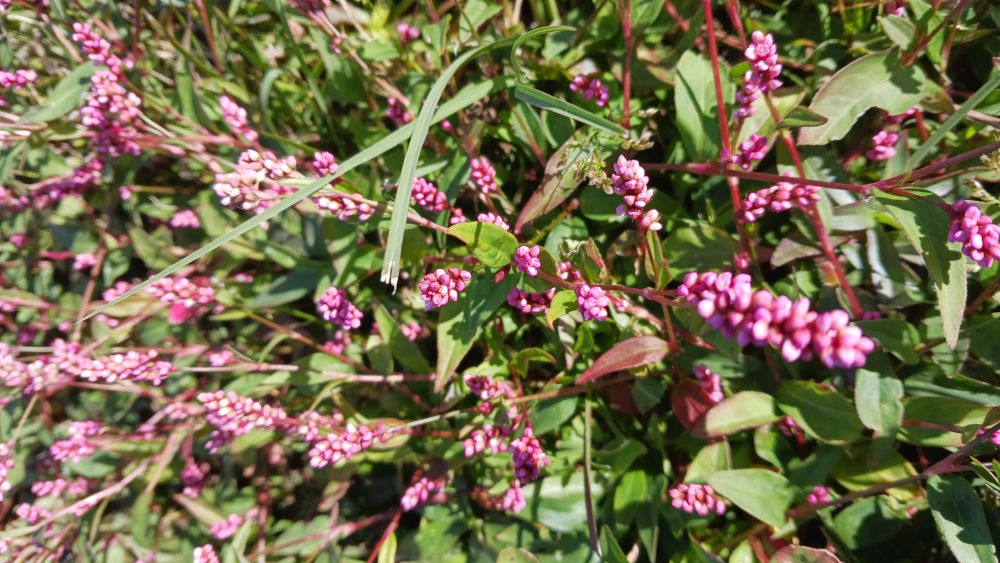
Identification: Swamp Smartweed (Mild Waterpepper)
The plant in your photos is swamp smartweed (Persicaria hydropiperoides, formerly Polygonum hydropiperoides), a member of the knotweed/smartweed family (Polygonaceae). The evidence from your photos lines up well with this species:
- Sprawling, mat-forming stems that root at the nodes and turn upward at the tips — a hallmark of this species, which commonly forms large dense circular colonies exactly like the patch in your wide shot[minnesotawildflowers][fsus.ncbg.unc]
- Slender, erect pink spikes (roughly 3–5 mm wide) at the stem tips, with flowers closely spaced along the spike — matching its narrow racemes[missouriplants]
- Lance-shaped leaves that lack the dark chevron blotch found in lady’s thumb and Pennsylvania smartweed, with the papery sheath (ocrea) at each swollen node that defines the smartweed group[fsus.ncbg.unc]
- Still blooming in November — it flowers from June through November, later than most lookalikes[efloras]
- Reddish-jointed stems and a preference for sunny, moist ground in the Gulf Coastal Plain, where it’s common[vaplantatlas][fsus.ncbg.unc]
One confirmation check: this species strongly favors damp soil — swales, ditch edges, poorly drained lawn areas. If that patch stays moist, that seals it. It’s a native perennial, by the way, and the pink carpet it makes is a nectar source for bees and other pollinators (you can see one visiting in your first photo).
Lookalikes Ruled Out
- Pinkhead knotweed (Persicaria capitata) — has round, ball-shaped flower heads and a burgundy chevron on each leaf; your plant has elongated spikes and unmarked leaves
- Lady’s thumb (Persicaria maculosa) — has the dark chevron marking, and grows bushy rather than creeping
- Prostrate knotweed (Polygonum aviculare) — has blue-green leaves with tiny inconspicuous flowers in the leaf axils, not showy terminal spikes
A caveat: smartweeds are a notoriously tricky group, and species-level certainty usually requires examining the achenes and ocrea hairs under magnification. But given the creeping mat habit, node-rooting stems, chevron-free leaves, slender pink spikes, November bloom, and your Gulf Coast location, swamp smartweed is by far the best fit. If it’s in a spot where you don’t want it, hand-pulling the mats before seed set works, since the roots are shallow.
